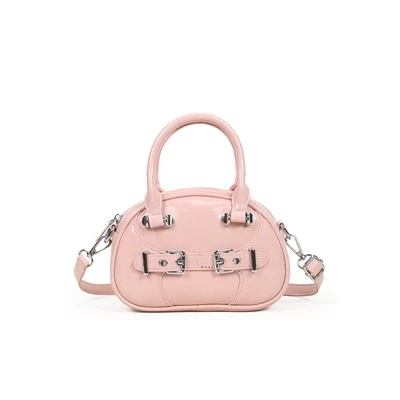
There is a distinct moment during a short trip-usually right around the time you are running through a cobblestone street to catch a train, or maneuvering through a packed airport security line-when the weight of your handbag transforms from a minor detail into the absolute center of your universe.
We have all been there: you packed for a simple three-day weekend, but by hour six, your shoulder feels like it has been staging a solo protest. Your bag is digging into your collarbone, your keys have vanished into a structural black hole at the bottom of the main compartment, and you are left wondering how a quick getaway turned into a strenuous weight-lifting session.
The secret to effortless short-term travel isn't packing less-it's picking the right vessel. In 2026, the global travel landscape favors speed, mobility, and strict airline personal item limits. Heavy leather statement bags and flimsy, unorganized canvas sacks are out. Instead, a new class of travel-friendly, lightweight handbags has taken over the market, striking a perfect balance between sleek aesthetics, high-performance materials, and smart internal architecture.
Whether you are heading off on a 48-hour business blitz, a quick weekend city escape, or a relaxing countryside retreat, this comprehensive guide will break down how to choose the perfect lightweight travel handbag, the best materials to look for, and how to pack it efficiently so you can move with complete freedom.
Why the "Right" Handbag Changes Everything for Short Trips
When traveling for just two to four days, your primary luggage is often a carry-on wheelie or a small duffel. However, your handbag is your command center. It holds your passport, boarding passes, phone, wallet, hand sanitizer, portable charger, and maybe a light layer or a tablet.
Choosing a heavy, overly structured, or unorganized handbag introduces immediate friction into your journey:
The Weight Penalty: A luxury leather tote can easily weigh 2 to 3 pounds empty. Add your daily essentials, and you are carrying a substantial load before you even buy a souvenir.
The Security Squeeze: Short trips mean constant transitions. If your bag doesn't have a secure zipper or smart pockets, pulling out your ID or sliding your phone away at a TSA checkpoint becomes an awkward scramble.
The Versatility Void: A great travel handbag needs to be a chameleon. It has to look chic enough for an upscale dinner, rugged enough for an unexpected afternoon walking tour, and compact enough to fit under the airplane seat in front of you without sacrificing your legroom.
By switching to an engineered lightweight handbag, you drastically reduce physical fatigue, save yourself from unexpected baggage fees on budget airlines, and keep your hands free to hold a camera, a map, or a much-needed espresso.
The Core Anatomy of a Perfect Travel Handbag
When hunting for the ultimate short-trip companion, look beyond the price tag or the brand name. Instead, evaluate the bag based on four non-negotiable pillars of travel design: Base Weight, Security, Ergonomics, and Organization.
Pillar 1: Ultralight Base Weight
As a golden rule for travel, an empty handbag should weigh less than 1.5 pounds (approx. 0.7 kg). Ideally, you want to look for bags that hover around the 0.5 to 1-pound mark. Every ounce saved on the construction of the bag itself is an extra ounce of gear, tech, or personal comfort you can carry without strain.
Pillar 2: Multi-Layered Security
Travel exposes you to crowded transit hubs, busy markets, and unfamiliar spaces where pickpocketing can be common. A great travel handbag must feature:
A Secure Top Closure: Avoid open-top totes or loose magnetic snaps. Look for high-quality, smooth-gliding zippers (like Japanese YKK zippers) that close completely.
Hidden Exterior Pockets: A dedicated, zippered pocket that rests flat against your body is the ideal place to store your passport, smartphone, and credit cards.
Slash-Resistant Elements: Many modern travel bags feature subtle, lightweight wire mesh woven into the straps or base fabrics to prevent drive-by cutting thefts.
Pillar 3: Adaptive Ergonomics & Carrying Styles
How you carry your bag dictates how long you can comfortably stay on your feet. Look for handbags that offer multiple conversion styles, such as:
Wide, Padded Straps: Thin, unpadded straps act like cheese wire on your shoulders when a bag is packed to capacity. Wide straps distribute the weight evenly across your trapezoid muscles.
Crossbody Capability: A long, adjustable strap allows you to wear the bag diagonally across your torso. This centers the load close to your center of gravity and frees up both of your hands.
Luggage Pass-Through Sleeve: If you are traveling with a rolling suitcase, a trolley sleeve on the back of your handbag allows you to slide it securely over the suitcase handle, completely removing the weight from your body while navigating terminals.
Pillar 4: Intuitive Internal Architecture
A giant, open compartment is a recipe for travel chaos. Look for targeted organization that segment your gear logically:
| Feature | Travel Utility |
| Light-Colored Interior Lining | High-contrast liners (like light gray or bright orange) reflect light, making it incredibly easy to spot dark items at the bottom of your bag. |
| Dedicated Tech Pocket | A padded sleeve that keeps an iPad, Kindle, or small e-reader isolated from your keys and water bottle. |
| Water Bottle Mesh | An internal or external elasticized pocket that holds a reusable bottle upright to prevent leaks onto your electronics. |
| Key Tether / Leash | A clipped cord that ensures you never have to empty your entire bag on a dark street corner just to find your hotel room key. |
High-Performance Materials: Beyond Basic Canvas and Heavy Leather
The secret weapon behind the revolution of lightweight handbags in 2026 is fabric engineering. Traditional luxury leather looks timeless but handles weather poorly and weighs too much. Basic cheap canvas is soft but absorbs moisture like a sponge and stains instantly.
If you want a bag that lasts through years of rough travel, seek out these high-performance, lightweight alternative materials:
1. Crinkle Nylon and High-Tenacity Ballistic Weaves
Nylon is the undisputed king of lightweight travel gear. Modern varieties, such as 420D or 500D high-tenacity nylon, offer exceptional tensile strength while remaining incredibly thin.
Why it rules: It resists tears, cleans easily with a simple wet wipe, and is naturally water-resistant.
The Aesthetic: Nylon has shifted away from looking purely "sporty" or industrial. Premium brands now finish nylon with satin, matte, or crinkled textures that mimic luxury silk or fine twill, making them perfectly acceptable for business meetings or upscale restaurants.
2. Recycled Polyethylene Terephthalate (RPET)
Made from post-consumer recycled plastic bottles, RPET has become a staple for eco-conscious travelers.
Why it rules: It performs almost identically to virgin polyester-it is tough, lightweight, and highly resistant to abrasion. Choosing RPET can reduce carbon emissions by roughly 30% compared to standard polyester production.
The Aesthetic: It can be woven into smooth, canvas-like textures, soft quilted structures, or sleek technical shells that drape beautifully against the body.
3. High-Grade Premium Polyurethane (Vegan Leather)
If you love the classic look of a structured leather handbag but refuse to carry the weight or worry about rain damage, premium polyurethane (PU) or microfiber leather is your best option.
Why it rules: High-quality vegan leathers are engineered to be significantly lighter than real animal hides. They do not crack when exposed to moisture, they require zero conditioning, and they are completely scratch-resistant.
The Aesthetic: Visually indistinguishable from fine calfskin or pebbled grain leather, giving you a polished, professional look for business trips.
The 4 Essential Silhouettes for Short Trips
Not all short trips are created equal. A weekend exploration of Tokyo's subways demands a different bag structure than a corporate retreat in London. Here are the four primary silhouettes that dominate lightweight travel:
Silhouette A: The Convertible Anti-Theft Crossbody
The absolute workhorse of travel bags. These bags usually sit flat against your hip, feature a crescent or rectangular shape, and come packed with lockable zippers.
Best For: All-day sightseeing, city-hopping, and public transit navigation.
Why it works: It maximizes security while distributing weight perfectly across your body, keeping your hands entirely free for taking photos or checking maps.
Silhouette B: The Lightweight Utility Tote (with Trolley Sleeve)
A spacious bag with long shoulder drops and an open or zippered main compartment, paired with structured interior pockets.
Best For: Business trips, flights where it serves as your dedicated "personal item," or road trips where you need instant access to bulkier items.
Why it works: It offers massive volume for its weight and stacks beautifully on top of a rolling carry-on.
Silhouette C: The Modern Crescent / Sling Bag
The breakout travel silhouette of recent years. Shaped like a curved teardrop or crescent moon, this bag is worn tightly across the chest or back.
Best For: Minimalist travelers who carry only the bare essentials (phone, wallet, keys, passport, sunglasses).
Why it works: The curved design hugs the natural contour of your body. It doesn't bounce or sway when you walk quickly, and it fits comfortably underneath a jacket for ultimate stealth and security.
Silhouette D: The Packable/Foldable Duffle or Tote
An ultra-thin, unstructured bag made of ripstop nylon that folds down into a self-contained pouch no larger than a wallet.
Best For: The "Emergency Bag" strategy.
Why it works: You pack it completely flat inside your main luggage on the way out. If you buy gifts, clothing, or souvenirs during your short trip, you expand it into a full-sized shoulder bag for the journey home, ensuring you never have to stress about space.
Master the Edit: How to Pack Your Travel Handbag Efficiently
A lightweight bag only stays lightweight if you manage what goes inside it. Packing a handbag for a short trip requires a strategic approach. Use the Zone Packing Method to ensure optimal weight distribution and effortless access:
Zone 1: The Deep Base (Heavy, Infrequently Used Items)
Place your heaviest items at the absolute bottom of the bag, close to where the bag rests against your body. This includes backup portable power banks, tech chargers, a cosmetic pouch, or an umbrella. Placing heavy items at the bottom prevents the bag from tipping over and stabilizes the load on your shoulder.
Zone 2: The Mid-Core (Bulky but Soft Items)
This is the middle layer of your bag. Store your light layers here-a packable windbreaker, a pashmina scarf (perfect for chilly airplane cabins), or your sunglasses case.
Zone 3: The Perimeter & Top Tier (High-Frequency Access)
Reserve the top of the main compartment and the inner slip pockets for items you need to grab at a moment's notice:
Lip balm and hand sanitizer.
Earbuds or noise-canceling headphones.
Mints or small travel snacks.
Zone 4: The Secure Body Shield (Sensitive Documents)
Use the hidden back zippered pocket solely for your primary essentials: Passport, boarding passes, wallet, and smartphone. Never put these items in an easily accessible front pocket where they can be slipped out without your knowledge.
Real-World Scenarios: Choosing Your Handbag Match
To help you visualize how to integrate these principles into your travel style, let's look at three classic short-trip profiles:
Scenario 1: The 48-Hour Corporate Blitz
The Vibe: Direct flights, executive boardrooms, and client dinners.
The Perfect Bag: A structured matte nylon or high-grade premium polyurethane (vegan leather) tote with a dedicated 14-inch laptop compartment and a trolley sleeve.
The Strategy: During transit, it sits on your rolling suitcase. When you arrive at the office, it looks like a sophisticated professional briefcase. At dinner, it's sleek enough to sit next to your chair without shouting "travel gear."
Scenario 2: The Weekend Cultural City Break
The Vibe: 20,000 steps a day, exploring museums, riding subways, and sitting at sidewalk cafés.
The Perfect Bag: A medium-sized crescent sling or an anti-theft crossbody bag made from water-resistant crinkle nylon.
The Strategy: Worn diagonally across your chest, this keeps your hands totally free to hold a camera or browse racks at a local vintage market. The water-resistant shell means you don't have to panic if an unexpected afternoon rain shower hits.
Scenario 3: The Spontaneous Nature & Road Trip Escape
The Vibe: Packing into a car trunk, light day hikes, and casual coastal boardwalk walks.
The Perfect Bag: A rugged, ripstop nylon hybrid backpack-tote or a spacious utility sling.
The Strategy: You need something that can handle being tossed onto the grass or dirt without tearing. A sportier nylon weave resists abrasion from outdoor elements and can be easily washed down if it gets dusty on the trail.
Lighten Your Load, Elevate Your Journey
Travel is ultimately about the experiences you collect, not the baggage you drag along with you. When you free yourself from the physical burden of a heavy, unorganized handbag, your entire travel posture changes. You walk faster, you look around more, and you experience your destination with a sense of fluid, unburdened curiosity.
Investing in a premium, travel-friendly lightweight handbag isn't just an organizing upgrade-it's a commitment to a smarter, more liberated way of exploring the world. On your next short trip, ditch the excess weight, lean into high-performance fabrics, organize with tactical precision, and enjoy the effortless freedom of traveling light.