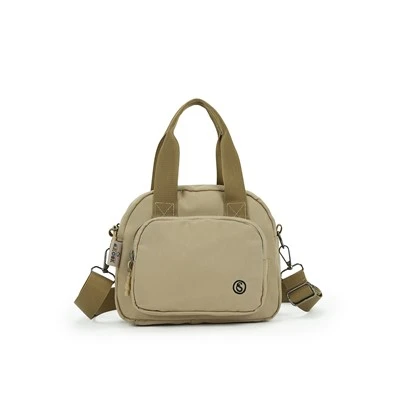
For the modern working woman, a handbag is never just an accessory. It is a mobile headquarters, a survival kit, and a daily companion rolled into one. On any given Tuesday, your tote bag might be tasked with carrying a 15-inch laptop, a bulky charger, a notebook, a makeup pouch, a water bottle, an umbrella, and perhaps a pair of commuter flats.
Finding a bag that can handle this heavy lifting without looking like a shapeless duffel or tearing at the seams after three months is a notoriously difficult challenge. The ideal work tote must strike a flawless balance between aesthetic sophistication and utilitarian engineering.
This comprehensive guide is designed to help you navigate the complex architecture of large-capacity tote bags. We will dissect the science of materials, analyze the mechanics of bag weight, and provide actionable storage strategies to maximize efficiency and protect your physical health.
The Material Hierarchy: Balancing Aesthetics, Longevity, and Upkeep
The material of your tote bag dictates everything: its empty weight, its structural longevity, its weather resistance, and the unspoken message it sends when you walk into a boardroom. For a high-capacity work tote, materials generally fall into four primary categories, each with distinct trade-offs.
Full-Grain and Top-Grain Leather: The Executive Standard
If you are looking for an investment piece that screams professionalism and ages beautifully, genuine leather remains the gold standard. However, not all leathers are created equal.
Full-Grain Leather: This is the highest quality leather available. It includes the entire outer layer of the hide, retaining all natural imperfections and toughness. Full-grain totes are incredibly durable and develop a beautiful patina (a rich sheen) over time. The drawback? They are heavy when completely empty and require regular conditioning.
Top-Grain Leather: Slightly more processed than full-grain, top-grain leather has its top layer sanded down to remove imperfections. It is often thinner, lighter, and more flexible than full-grain, making it an excellent choice for a daily tote if you want a cleaner, uniform look with a slightly lower initial weight.
Pebbled vs. Saffiano Leather: For a work bag, texture matters. Pebbled leather hides scratches beautifully. Saffiano leather (pioneered by Prada) features a cross-hatch texture pressed into a wax coating. It is highly water-resistant, incredibly rigid, and scratch-proof, making it one of the most practical executive choices.
Vegan Leather and Polyurethane (PU): The Cruelty-Free, Lightweight Contender
Modern synthetic leathers have come a long way from the cheap, plastic-looking "pleather" of the past. High-quality polyurethane (PU) and microfiber leathers offer excellent alternatives.
Pros: They are significantly lighter than genuine leather, entirely water-resistant, wipe-clean, and generally much more affordable. High-grade microfiber leather can mimic the feel and durability of genuine leather remarkably well.
Cons: Vegan leather does not age; it degrades. Over 2 to 5 years of heavy daily use, the edges may crack, or the coating might peel, especially around stress points like the straps. They also lack the breathability and natural structural memory of genuine hide.


Nylon and Canvas: The Commuter's Best Friend
If your daily commute involves crowded subways, long walks, or unpredictable weather, high-performance textiles offer unmatched utility.
Ballistic Nylon: Originally developed for military flak jackets, ballistic nylon is virtually indestructible. It resists tears, scuffs, and water. Totes made from high-density nylon (like those from Tumi or Longchamp) offer a sleek, minimalist, and ultra-lightweight tech aesthetic.
Waxed or Heavyweight Canvas: For creative professionals or those in more casual corporate environments, a heavy-duty canvas tote provides a classic, structured look. Waxed canvas adds a layer of water resistance and a rugged, distinct character. However, raw canvas can stain easily and pick up lint or denim color transfer.


Material Comparison Matrix
| Material Type | Average Durability | Water Resistance | Structural Rigidity | Empty Weight | Best For |
| Saffiano Leather | High (5–10+ years) | Moderate-High | High (Stands upright) | Heavy | Formal boardrooms, executive roles |
| Pebbled Leather | High (5–10+ years) | Moderate | Medium (Slouches over time) | Heavy | Creative corporate, smart-casual |
| High-Grade PU | Medium (2–4 years) | High | Variable | Medium-Light | Budget-conscious, rainy climates |
| Ballistic Nylon | Extremely High (10+ years) | High | Low-Medium (Needs lining) | Ultra-Light | Heavy tech users, active commuters |
| Waxed Canvas | High (5–8 years) | Moderate-High | Medium | Light-Medium | Creative, casual, or hybrid workspaces |
The Weight Equation: Ergonomics and Structural Engineering
A major pitfall when buying a large tote is focusing purely on volume while ignoring weight distribution. Carrying a heavy, poorly designed bag on one shoulder day after day is a direct ticket to chronic neck, shoulder, and lower-back pain.
The Golden Rule of Bag Weight
As a medical and ergonomic rule of thumb, your fully loaded work tote should never exceed 10% of your body weight. If you weigh 140 lbs (64 kg), your bag should top out at 14 lbs (6.4 kg).
To achieve this, the empty weight of the bag itself becomes crucial. A heavy leather tote can weigh 3 to 4 lbs before you put a single item inside it. For heavy haulers, look for an unladen bag weight of under 2.5 lbs (1.1 kg).
Strap Architecture: The Make-or-Break Detail
The straps are the biological interface between the bag and your body. Pay close attention to these three factors:
Strap Width: Thin, delicate straps look elegant, but they act like cheese wires when the bag is loaded, cutting into your trapezius muscles and restricting blood flow. Look for flat straps that are at least 0.6 to 0.75 inches (1.5 to 2 cm) wide to distribute the downward force across a larger surface area.
Strap Drop Length: The "drop" is the distance from the top of the straps to the top of the bag. For a comfortable winter-to-summer transition, you need a strap drop of 9 to 11 inches (23 to 28 cm). Anything shorter will trap the bag uncomfortably tight under your arm when wearing a thick wool coat; anything longer causes the bag to bump against your hips as you walk, destabilizing your gait.
Reinforcement: Check where the strap meets the body of the bag. It should never be held by a single line of stitching. Look for cross-stitched squares (X-boxes), metal rivets, or straps that loop entirely underneath the bag's base for maximum load-bearing security.
Base Rigidity and "The Sag Factor"
A premium large-capacity tote must have a structured, reinforced base. When you place a heavy laptop into a bag with a soft, unreinforced bottom, the center sags down. This structural collapse pulls the straps inward, causing them to pinch your neck, while making the bag swing wildly like a pendulum. Look for totes featuring an internal baseboard and metal feet (studs) to protect the bottom from dirty floors and maintain structural integrity.
Storage Architecture: Organizing the Chaos
A giant, open compartment with no pockets is not a tote; it is a black hole. Spending five minutes fishing for your keys or subway card outside an office building is both frustrating and unprofessional. Effective storage requires a tactical blend of built-in compartments and modular organization.
The Essential Layout Checklist
When inspecting the interior of a potential work tote, look for these foundational features:
Suspended, Padded Laptop Sleeve: Your laptop should never sit directly on the bottom of the bag. A suspended sleeve ensures that if you drop your bag onto a hard concrete floor, the laptop never hits the ground. It should ideally fit up to a 15-inch device securely with a velcro or magnetic strap.
Dual Tech Pockets: Dedicated slip pockets for portable power banks, mice, and charging cords keep cables from tangling into a chaotic bird's nest.
The Secure Zone: At least one deep, zippered interior pocket for sensitive items like your wallet, passport, and emergency personal care products.
Quick-Access Exterior Pocket: A discreet slide pocket on the outside of the bag (ideally resting against your body) for your smartphone, work badge, or transit card.
Modular Organization: The Pouch System
Even the best-designed bags can benefit from a modular organization strategy. Instead of dropping individual loose items into your tote, group them into distinct, color-coded pouches. This makes switching between bags instantaneous and keeps the interior pristine.
The Tech Pouch: A dedicated, zip-up case for your charging bricks, dongles, presentation clicker, and headphones.
The Beauty/Hygiene Clutch: A small, easily wipeable pouch for lipstick, hand sanitizer, blotting papers, and emergency medications.
The Document Folder: A slim, rigid folder or portfolio to keep paper documents, contracts, or physical notebooks from getting dog-eared and bent by heavier items.
Packing Ergonomics: The Physics of Distribution
How you place items inside your bag matters just as much as what you pack. Poor distribution shifts your center of gravity, forces your spine to curve unnervingly, and makes the bag feel significantly heavier than it actually is.
The Layered Packing Strategy
To achieve maximum comfort and protect your spine, visualize your tote bag in three horizontal layers and two vertical zones:
The Bottom Layer (Heavy/Non-Urgent Items): Place heavy items that you won't need until you arrive at your destination-such as an extra pair of shoes or your lunchbox-flat at the very bottom of the bag.
The Spine Zone (Heaviest Items Close to the Body): Slide your laptop and heaviest notebooks into the sleeve closest to the back of the bag (the side that rests directly against your hip/torso). Keeping heavy objects close to your center of gravity minimizes the outward rotational pull on your shoulder.
The Core/Outer Zone (Medium-Weight Items): Place your water bottle and modular pouches in the center, keeping them upright to prevent spills.
The Top Layer (Lightweight/High-Frequency Items): Your sunglasses, transit card, keys, and headphones should sit right at the top for immediate access.
Maintenance and Longevity Secrets
A high-capacity tote bag undergoes significant physical stress. Implementing a simple care routine can easily double or triple the lifespan of your investment piece.
Never Overstuff the Zippers: If you have to forcefully pull the sides of your bag together to close a zipper, it is overloaded. This places immense pressure on the zipper teeth, leading to split tracks or broken pull tabs. If you routinely run out of space, it is time to downsize your daily carry or upgrade to a larger volume model.
The Weekend Empty-Out: At the end of every workweek, commit to completely emptying your tote. Shake out dust, hairpins, and receipts. This relieves the constant structural tension on the straps and handles, allowing the material to rest and regain its shape over the weekend.
Climate Protection:
For leather bags, apply a high-quality leather conditioner every 3 to 4 months to prevent the hide from drying out and cracking under office air conditioning.
For fabric and canvas bags, spray them with a fabric protectant (like Scotchgard) before your first use to create an invisible shield against rain and coffee spills.
Conclusion
Your work tote is a silent business partner. It protects the expensive technology that drives your career, keeps your daily essentials organized, and supports your physical well-being throughout demanding travel and commutes.
When choosing your next bag, look past the initial visual appeal. Test the strap width, analyze the unladen weight of the material, and ensure the interior layout matches your tech setup. By prioritizing smart material selection, sound ergonomics, and disciplined organization, you don't just buy a bag-you upgrade your entire daily workflow.