When we think about personal style, we often focus on the clothes: the cut of a blazer, the silhouette of a dress, or the wash of a pair of jeans. We spend hours in fitting rooms trying to understand which silhouettes flatter our frames, yet when it comes to accessories, we tend to shop based purely on impulse, color trend, or brand prestige.
Here is an essential fashion truth that style insiders know: your handbag is not just a container for your keys and lipstick-it is a powerful visual tool that fundamentally alters your body proportions.
Just like a vertical stripe elongates or a peplum flare creates an illusion of a smaller waist, the size, shape, structure, and resting position of your handbag can instantly rebalance your silhouette. A bag acts as an anchor for the eye. Wherever it sits on your body is exactly where attention will be drawn. If you choose a bag that mimics your body's vulnerabilities or rests on the widest part of your frame, it can throw off your entire visual alignment. Conversely, selecting a bag that provides a geometric contrast to your body type can create an effortlessly balanced, high-fashion look.
This comprehensive guide breaks down the science of handbag geometry, providing an in-depth blueprint for matching the right bag to every unique body shape.
The Core Principles of Handbag Geometry
Before diving into specific body shapes, it is vital to understand the three fundamental laws of handbag selection: Scale, Shape, and Placement.
1. The Law of Scale (Proportion)
The size of your handbag must be in direct proportion to your physical scale.
If you are petite or short in stature: Carrying an oversized, slouchy tote will swallow your frame, making you look shorter and weighed down.
If you are tall or plus-sized: Carrying a tiny, delicate micro-bag can look disproportionate, making your frame appear larger by comparison.
Your bag should scale up or down relative to your height and bone structure to maintain visual equilibrium.
2. The Law of Shape (Contrast)
Opposites attract in fashion. To create balance, choose a handbag silhouette that is the opposite of your natural body contours:
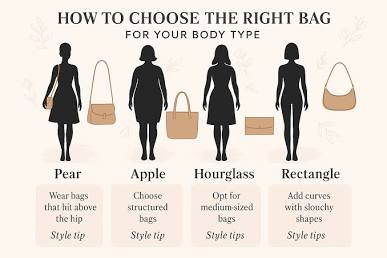
Curvaceous, rounded body types (such as Pear, Apple, and Hourglass) benefit from structured, angular, and geometric bags (like boxy satchels, rectangular clutches, and structured top-handles) to add definition.
Angular, straight, or athletic body types (such as Rectangle and Inverted Triangle) benefit from slouchy, rounded, and soft-form bags (like hobo bags, bucket bags, and crescent-shaped shoulders) to introduce soft curves.
3. The Law of Placement (The Focal Point)
The most transformative aspect of a handbag is where it hangs or rests against your body. The human eye naturally travels to the bottom or widest point of the bag. Therefore, a bag should never rest on a part of your body that you prefer not to emphasize.
A short shoulder bag that rests right under the armpit emphasizes the bust.
A mid-length shoulder bag resting at the waistline draws attention to the midsection.
A long crossbody or messenger bag that hits at the hip highlights hip width.
By manipulating the strap length, you control exactly where the visual focus lands.
1. The Pear Body Shape (Triangle)
Identifying Characteristics
The Pear (or Triangle) body shape is defined by a silhouette where the hips and thighs are wider than the shoulders and bust. Pear-shaped individuals typically possess a beautifully defined waist, an elegant neck, and a relatively slender upper torso.
The Style Goal
The primary objective for the Pear shape is to draw the eye upward, drawing attention away from the hips and adding visual volume to the upper torso and shoulders to balance the lower body.
Best Handbag Matches
The Short Shoulder Bag (The 90s Shoulder Bag / Baguette)
The ultimate companion for a Pear shape is a short-strap shoulder bag that sits snugly under the armpit or rests right against the ribs. Because the bag terminates well above the waistline, it adds bulk and horizontal presence to your upper half, effectively matching the width of your hips.
The Structured Top-Handle Bag
Carried in the hand or draped elegantly over the forearm (crook of the elbow), a structured top-handle bag keeps the visual weight clear of your hip line. Opt for medium sizes with crisp, geometric lines to contrast with the natural curves of your lower half.
The Statement Clutch
When dressing for the evening, an oversized, structured envelope clutch tucked under the arm is ideal. It keeps all architectural interest up top and accentuates your slim midsection.
| Handbag Type | Why It Works | Optimal Placement |
| Baguette / Short Shoulder | Adds volume to the upper torso; keeps hips clear. | Tucked under the arm, resting above the waist. |
| Structured Satchel | Forearm carry draws focus to the midriff and hands. | Carried at the crook of the elbow. |
| Oversized Envelope Clutch | Draws attention to a narrow waist and slim torso. | Tucked under the arm or held at waist level. |
Handbags to Avoid
Long Crossbody Bags: Any bag on a long strap that bounces or rests directly on the widest part of your hips or thighs will visually widen that area.
Slouchy Hobo Bags with Long Straps: These drag the eye downward and add unneeded bulk to your lower silhouette.
2. The Inverted Triangle Body Shape
Identifying Characteristics
The Inverted Triangle shape features broad, dominant shoulders and a generous bust, paired with narrow hips, a subtle waist, and slender legs. It is a common silhouette among athletic individuals and swimmers.
The Style Goal
For the Inverted Triangle, the goal is exactly the reverse of the Pear shape. You want to draw the eye downward to create volume around your slender hips and thighs, taking the focus off your broad upper body.
Best Handbag Matches
Long-Strap Crossbody Bags
The crossbody bag is a phenomenal choice for this body type. A long strap allows the body of the bag to rest comfortably against the hip or upper thigh. This adds essential visual volume and interest to your lower half, beautifully balancing your shoulders.
Slouchy Hobo and Bucket Bags
Because your upper body is inherently structured and angular, choosing a bag with a relaxed, fluid form-like a soft leather hobo or a drawstring bucket bag-adds a welcoming softness. Look for styles with medium-to-long drop straps.
Hip-Level Messenger and Flap Bags
Bags with long, adjustable shoulder straps that sit low on the frame work wonders. Go for detailed designs with buckles, exterior pockets, or fringes, as these details help ground the lower half of your silhouette.
Handbags to Avoid
Short, Chunky Shoulder Bags: Avoid bags that sit tight under the arm or next to the bust line. They add unwanted mass to your broadest zone.
Tiny, Delicate Clutches: Carrying a small clutch close to your chest or under your arm will only make your shoulders look broader by comparison.
3. The Rectangle Body Shape (Banana / Athletic)
Identifying Characteristics
The Rectangle (athletic or straight) body shape is characterized by an evenly balanced silhouette where the shoulders, waist, and hips are roughly the same width. Individuals with this body type often have an athletic build, long limbs, and a less defined waistline.
The Style Goal
The primary objective for the Rectangle shape is to break up the straight vertical line and create the illusion of curves and a more defined waist.
Best Handbag Matches
Slouchy Hobo Bags
The fluid, crescent-shaped drape of a classic hobo bag is perfect for a straight frame. The lack of rigid structure creates soft, sweeping curves that visually counter the straight lines of an athletic body.
Soft, Oversized Totes and Drawstring Bags
An oversized tote made of supple, unstructured leather or suede will naturally sag and fold when carried, introducing organic lines and dimension to your silhouette.
Crossbody Bags Adjusted to the Waist
By wearing a crossbody bag that rests precisely at your waistline, you can break up the straight canvas of your torso and create a focal point that implies a cinched middle.
Styling Tip for Rectangles: Look for bags made from rich, tactile materials-such as woven leather, quilting, shearling, or fringe. Texture breaks up straight planes and creates depth.
Handbags to Avoid
Boxy, Rigid, Square-Form Bags: Extremely structured, rectangular briefcases, box clutches, or rigid square satchels will reinforce the straight lines of your body, making you look boxier.
Vertically Oriented Rectangle Bags: Long, narrow vertical bags accentuate your vertical length without adding curves.
4. The Apple Body Shape (Round / Inverted Oval)
Identifying Characteristics
The Apple body shape features a silhouette where the weight is predominantly carried around the midsection and upper torso. Apple shapes typically have a full bust, a broader waist, an undefined midriff, but beautifully slender legs and elegant ankles.
The Style Goal
The goal for an Apple body shape is to elongate the torso and draw attention away from the midsection, directing the eye either upward to the neckline or downward to the slender lower legs.
Best Handbag Matches
Highly Structured Satchels and Top-Handles
Because the Apple shape is naturally round and soft through the center, it is crucial to introduce hard geometric lines to ground your look. A structured, firm-sided satchel or trapezoidal top-handle bag provides an excellent architectural counterweight.
Vertical Totes and Shoppers
Look for tall, sleek, structured tote bags where the vertical length is greater than the horizontal width. This design creates a strong vertical line next to your body, drawing the eye up and down to visually elongate your torso.
Chain-Strap Evening Clutches (Held Low)
For evening looks, opt for a structured hard-case clutch with an optional long chain strap. Let the bag hang low, past your hips, to direct attention toward your slim legs.
| Body Element | Handbag Strategy | Recommended Bag |
| Soft Midsection | Introduce sharp, rigid lines | Medium Structured Satchel |
| Short Torso Illusion | Create a long vertical path | Tall Vertical Tote / Shopper |
| Slender Legs | Direct attention downward | Low-hanging Chain-Strap Bag |
Handbags to Avoid
Mid-Length Shoulder Bags: Avoid any bag that hangs with a strap length that lands it directly parallel to your stomach or waist. This acts as a visual highlighter for the midsection.
Small, Slouchy, or Spherical Bags: Small, puffy bags or soft hobo styles repeat the rounded shapes of your body without offering any balancing structure.
5. The Hourglass Body Shape
Identifying Characteristics
The Hourglass shape is defined by a highly symmetrical silhouette where the bust and hips are of nearly equal width, paired with a significantly narrower, well-defined waist.
The Style Goal
The Hourglass shape is inherently balanced, so the main goal is simply to maintain that natural symmetry without hiding or disrupting it. You want to highlight your defined waist without adding unnecessary bulk to either your bust or your hips.
Best Handbag Matches
Medium-Sized, Proportional Handbags
The Hourglass figure can handle almost any handbag style, provided it is medium in scale. Bags that are neither overly boxy nor completely shapeless maintain your body's organic harmony beautifully.
The Crossbody with a Minimalist Strap
A crossbody bag worn across an hourglass shape can look incredibly chic, provided the strap is thin and minimal. The strap highlights the curve of the bust and waist without cutting through your silhouette too aggressively.
Tote Bags with an Open Drop
Classic top-handle totes or shoulder bags that sit comfortably below the hip or right above it keep your waist completely unobstructed, allowing your natural silhouette to shine.
Handbags to Avoid
Oversized, Slouchy Totes: Giant, shapeless hobo bags or oversized backpacks hide your defined waist and can make your balanced frame look boxy.
Bags with Excessively Bulky Hardware: Heavy fringe, massive buckles, or thick padded straps can clutter your natural curves.
6. Special Categories: Petite vs. Tall & Plus-Size
Beyond your geometric body shape, your overall scale plays a massive role in how a handbag translates visually.
The Petite Frame (Under 5'4" / 163 cm)
When you have a petite frame, big bags can easily overwhelm you. Your goal is to maximize your height and preserve your delicate proportions.
Best Choices: Small-to-medium crossbody bags, mini top-handles, structured baguettes, and vertical camera bags.
Pro Tip: Look for straps that keep the bag slightly above the hip to create the illusion of longer legs. Avoid massive, floor-grazing shopper bags.
The Tall & Slender Frame (Over 5'8" / 173 cm)
A tall, statuesque frame can look mismatched with tiny accessories. Small bags can appear lost on a tall silhouette.
Best Choices: Oversized slouchy hobos, large totes, spacious messenger bags, and wide clutches.
Pro Tip: Embrace horizontal bag designs (east-west silhouettes) to balance your vertical height.
The Plus-Size / Full-Figured Frame
For full-figured silhouettes, the secret is finding bags that match your scale while introducing sharp lines to add structure.
Best Choices: Generously sized, structured top-handles, medium-to-large structured satchels, and distinct A-line totes.
Pro Tip: Avoid micro-bags entirely, as they will look disproportionately small. Choose medium-large bags with distinct angles to cut an elegant, structured silhouette.
Summarized Selection Cheat Sheet
To make shopping effortless, use this simplified reference table to map your body type to its ideal handbag counterparts:
| Body Type | Key Structural Goal | Ideal Bag Typologies | Danger Zone (Avoid) |
| Pear (Triangle) | Shift focal point upward | Short shoulder bags, baguettes, structured wristlets, top-handles | Long crossbodies resting on hips, slouchy low-slung bags |
| Inverted Triangle | Add volume to lower half | Long-strap crossbodies, bucket bags, hip-level hobo bags | Short under-arm bags, tiny clutches near the bust |
| Rectangle | Create soft, feminine curves | Slouchy hobos, woven soft totes, drawstring bags, hip-crossing bags | Rigid box clutches, square cases, geometric briefcases |
| Apple (Round) | Elongate torso, add structure | Structured angular satchels, tall vertical totes, low chain-strap bags | Mid-length soft bags resting at waist, circular pouches |
| Hourglass | Maintain natural proportions | Balanced medium satchels, clean top-handles, slim crossbodies | Massive shapeless sacks, bags with distracting bulky hardware |
Final Words of Advice
When it comes down to it, a handbag is more than just a place to store your daily essentials; it is a finishing piece that ties your whole look together. By understanding how scale, shape, and placement interact with your natural silhouette, you can turn a simple accessory into an incredibly flattering style tool.
The next time you invest in a new bag, don't just look at it on the shelf or screen. Hold it against your body in front of a full-length mirror. Take note of where it rests, check the contrast of its lines against your shape, and observe where your eyes are naturally drawn. When you find that perfect match, your outfits will instantly feel more cohesive, balanced, and effortlessly put together.