We have all been there. You are standing in front of your closet, running late (as usual), keys in one hand, phone in the other, coffee precariously balanced on a stack of books. You look at your beautiful leather handbag hanging on the hook, then at your go-to canvas crossbody slung over the chair. The question paralyzes you: Which one do I grab?
For decades, the battle of the bags has raged on. On one side, you have the classic Shoulder Bag: elegant, professional, and timeless. On the other, the utilitarian Crossbody Bag: secure, ergonomic, and effortlessly cool.
But this isn't just about fashion. This is about physics, ergonomics, security, and lifestyle optimization. Choosing the wrong bag for your daily routine can lead to back pain, lost belongings, or simply a nagging feeling of being "unbalanced" all day.
In this ultimate daily use guide, we will break down the pros, cons, and best scenarios for each style. By the end, you won't just know which bag to buy-you will know exactly which bag to wear for every version of your day.
Part 1: The Anatomy of Functionality
Before we compare, we need to understand how these two designs sit on the human body. The difference is not merely strap length; it is a fundamental difference in weight distribution and access.
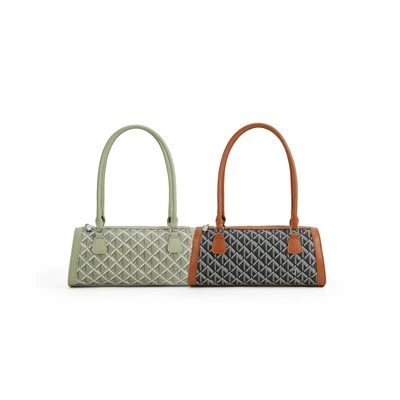
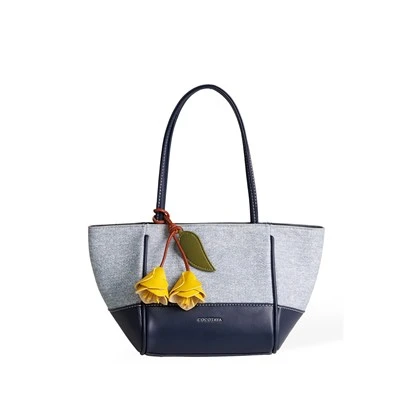
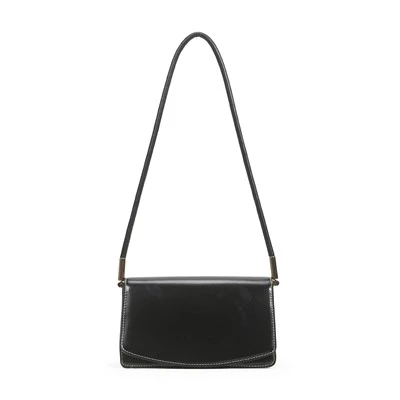
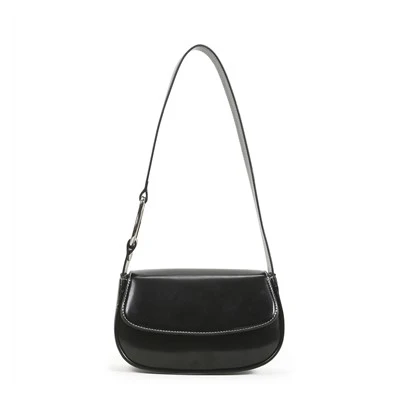
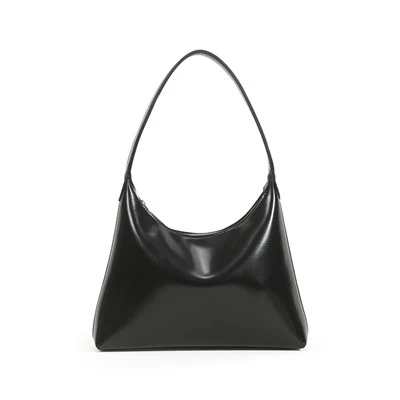
The Shoulder Bag: This bag sits in the crook of your arm or hangs from one shoulder via a short-to-medium strap. Its center of gravity is low, usually hitting around your hip or waist. Because the strap is short, the bag stays close to your torso but is technically "unsecured."


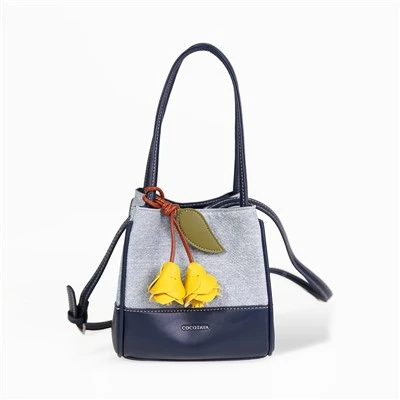
The Crossbody Bag: Featuring a long, adjustable strap, this bag travels diagonally across your chest, with the bag body resting on the opposite hip (usually the back hip). The strap creates a triangle of tension across your torso, locking the bag against your body.


The One-Sentence Summary:
Shoulder Bag = Elegant access, high mobility.
Crossbody Bag = Security, hands-free stability.
Part 2: When the Crossbody Bag Wins (The "Go Mode" Days)
Let's be honest: for the chaotic, busy, modern lifestyle, the crossbody bag is often the hero. Here is where it dominates daily use.
1. Urban Commuting & Public Transit
If you take the subway, bus, or train, the crossbody bag is non-negotiable. Why? Theft prevention. A shoulder bag hanging off your elbow is a beacon for pickpockets. In a tight crowd, you won't feel the snip of a strap or the unclasping of a latch.
The Win Condition: You can slide the bag to your front (wearing it like a chest plate) when standing in a crowded train. You can sit down without taking the bag off. You have your hands free to hold the overhead rail or scan your transit card.
2. Travel & Sightseeing
Walking eight miles through a foreign city? Do not bring a heavy shoulder bag. The crossbody distributes weight across your spine rather than pulling down on one shoulder. Even better, modern "anti-theft" crossbody bags come with locking zippers and slash-proof straps.
The Win Condition: You can take photos, eat street food, hold a map, and keep your water bottle in hand. The bag never falls off your shoulder when you bend down to tie your shoe.
3. Parenting & Dog Walking
Anyone who has ever chased a toddler or a runaway Labrador knows that a free shoulder is a luxury. Crossbody bags are the unofficial uniform of parents and pet owners.
The Win Condition: You have two hands free to catch a falling child, pick up a leash, or wipe a nose. The bag stays put no matter how much you twist or bend.
4. Casual Errands (Farmers Market, Grocery Store)
You are holding a basket of apples, a baguette, and your reusable tote. Where does your purse go? If it is a shoulder bag, it falls into the crook of your arm, competing for space with your groceries. If it is a crossbody, it sits on your back hip, completely out of the way of the transaction.
The Crossbody Verdict: Choose this for movement. If your day involves walking, standing, bending, or navigating crowds, the crossbody is superior.
Part 3: When the Shoulder Bag Wins (The "Sophisticated" Days)
Despite the crossbody's practical dominance, the shoulder bag remains the queen of the office, the dinner date, and the business lunch. You cannot replace elegance with utility.
1. The Professional Workplace
If you work in law, finance, or corporate management, a nylon crossbody looks out of place against a blazer or sheath dress. A structured shoulder bag (like a satchel or top-handle bag) signals professionalism.
The Win Condition: You can easily reach into a shoulder bag while standing at a copier or walking down a hallway. You don't have to drag a long strap across your expensive silk blouse. It is quicker to access documents, laptops, and badges.
2. Formal Events & Date Nights
A crossbody bag breaks the line of a dress. The long strap cuts across your waist or chest, visually segmenting your torso. On a date or at a wedding, you want clean lines. A clutch or a short-strapped shoulder bag (often called a "hobo" or "top handle") sits neatly under your arm.
The Win Condition: When you set the bag down at a dinner table, it stays upright. Crossbodies tend to flop over. Plus, accessing your lipstick or credit card without unclipping a long strap or pulling the bag around to your front is much more graceful.
3. Heavy Laptop Carry
Most crossbody bags are ergonomic only up to a certain weight (roughly 3-4 lbs). If you are carrying a 13-inch laptop, a water bottle, a charger, and a notebook, a thin crossbody strap will dig into your sternum and shoulder. A wide-strapped shoulder bag (or a tote) allows you to carry the weight low, switching arms frequently.
The Win Condition: You are walking from a parking garage to an office. Distance is short, weight is high. A shoulder bag lets you "hand carry" the top handle to rest your shoulder, then switch to the shoulder for the elevator ride.
4. The "Quick Access" Scenario
Need your phone every 90 seconds? Crossbody bags often force you to clutch the bag to your chest to unzip it. A shoulder bag, hanging openly at your hip, allows for one-handed digging.
The Win Condition: Running into a coffee shop for a pickup. You don't want to readjust the diagonal strap. You just slide the shoulder bag forward on your arm and grab your wallet.
The Shoulder Bag Verdict: Choose this for presentation and access. If your day involves sitting at a desk, attending meetings, or looking polished, the shoulder bag is the superior choice.
Part 4: The Health Check – Pain & Posture
Let's talk about your spine. Bag choice is a medical decision.
Shoulder Bag Risks:
Uneven Hips: When you carry a heavy bag on one shoulder, you naturally lift that shoulder to keep the strap from sliding off. This creates a "hiking" motion that compresses the trapezius muscle.
Neck Tension: Chronic shoulder bag users often develop "text neck" combined with "bag neck."
The Slip Factor: To keep a shoulder bag from falling, you subconsciously tense your arm and clamp your elbow to your side. This leads to elbow and wrist strain.
Crossbody Risks:
Digging: If the strap is too thin and the bag is heavy, the strap cuts into your breastbone and shoulder point.
Breathing Restriction: If you wear the strap too tight, it restricts diaphragm movement and chest expansion.
Posture Collapse: Heavy crossbodies pull your shoulder forward and down. Over time, this encourages a slouched, rounded posture.
The Solution:
For Crossbody: Buy wide straps (at least 1.5 inches). Shift the bag from your front to your back every hour.
For Shoulder Bag: Never carry more than 2-3 lbs. Use the "top handle" for heavy lifting, the shoulder strap for light walking. Switch shoulders every 20 minutes.
Part 5: Specific Daily Scenarios – A Decision Matrix
Let's break your average week into 7 scenarios. Here is the straight answer for each.
| Scenario | Winner | Why? |
|---|---|---|
| 9-5 Office Job (Desk heavy) | Shoulder Bag | You need to grab files/projects quickly. You sit for hours (crossbody straps bunch up under armpits in office chairs). |
| Freelance Coffee Shop Worker | Crossbody | You are moving between the counter, a table, and the bathroom. Crossbody holds your laptop sleeve securely without falling off the chair back. |
| Day at the Zoo with Kids | Crossbody | You need both hands for sunscreen, tickets, and holding hands. Security is key in crowds. |
| Wedding Guest | Shoulder Bag (Clutch/Top Handle) | A crossbody strap ruins the line of a cocktail dress. Plus, you will set it on the table during dinner anyway. |
| Airport Travel Day | Hybrid (Convertible) | Ideally, get a bag that converts. Crossbody for the security line/hands-free walking. Top handles for carrying onto the jet bridge. |
| Grocery Shopping | Crossbody | Keeps your wallet safe, leaves hands free for pushing a cart or carrying reusable bags. |
| Job Interview | Shoulder Bag (Structured) | A slouchy crossbody looks too casual. You need the ability to reach in for a notepad and pen smoothly without fumbling with a long strap. |
Part 6: The "Hybrid" Revolution – Best of Both Worlds
Before you rage-quit and decide you need two bags (and a chiropractor), know this: The industry has solved the problem. Convertible bags now dominate the mid-range market.
These bags feature a detachable, adjustable strap that can be shortened to wear as a shoulder bag or lengthened to crossbody.
How to wear a hybrid bag for each part of your day:
Morning Commute (Train/Bus): Lengthen strap. Wear crossbody.
Arrive at Office: Shorten strap. Wear as shoulder bag. Or, remove strap entirely; use built-in top handles.
Lunch Break: Loop strap over your shoulder (short setting).
After Work Drinks: Carry by the top handle as a clutch.
Top Hybrid Recommendations to look for:
The Longchamp Le Pliage: Can be shoulder or crossbody with an extender strap.
Madewell Sydney Shoulder Bag: Comes with two different straps.
Lululemon Everywhere Belt Bag (worn crossbody or shoulder).
Part 7: The 5-Item Rule – Choosing by Packing List
Ultimately, your bag is a vessel. What you carry dictates the form.
Carry this? Choose Crossbody:
Phone, card holder, keys, lip balm, hand sanitizer, sunglasses.
Why? Light weight allows the diagonal strap to feel like nothing.
Carry this? Choose Shoulder Bag:
Tablet, Kindle, makeup bag, large wallet, water bottle, notebook.
Why? The bulk needs "gravity access." You need to see inside the bag without unclipping it from your chest.
Carry this? Buy a Backpack (Seriously):
15-inch laptop, gym clothes, lunch container, umbrella.
Neither a shoulder bag nor a crossbody can handle this without causing rotator cuff damage.
Conclusion: Two Bags Are Better Than One
The honest truth of the "Crossbody Bag vs Shoulder Bag" debate is that asking for a single winner is like asking if a hammer is better than a screwdriver. It depends on the screw (or nail).
If you value security, hands-free mobility, and comfort during walking: Build your daily uniform around a Crossbody Bag.
If you value professional aesthetics, quick access while standing, and a polished silhouette: Invest in a structured Shoulder Bag.
However, the smartest daily user does not choose. They curate.
Your Daily Rotation Guide:
Monday (Office & Commute): Shoulder Bag (leave the laptop at work).
Wednesday (Work from Home + Errands): Crossbody Bag.
Friday (Casual Day + Drinks): Convertible Hybrid.
Sunday (Farmers Market + Family): Crossbody Bag.
Listen to your body, look at your calendar, and be honest about how much you actually walk versus sit. A 500bagthathurtsyourneckisabadinvestment.A500bagthathurtsyourneckisabadinvestment.A50 bag that disappears on your body is priceless.
Tomorrow morning, when you face that hook by the door, don't ask "Shoulder or crossbody?" Ask instead: "Am I walking or sitting today? Do I need my hands or my elegance?"
Answer that, and you will never carry the wrong bag again.