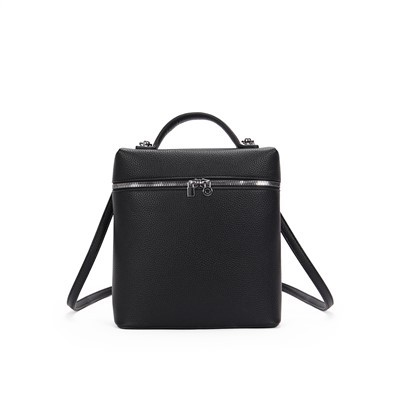
In recent years, the global community has witnessed a significant surge in environmental awareness. Consumers are becoming more conscious about the ecological footprint of the products they purchase, and this trend has extended to the fashion and accessories industry, particularly to bags. As a supplier of top-quality other bags, I often find myself at the crossroads of quality, style, and environmental responsibility. In this blog, I will delve into the question: Are top-quality other bags eco-friendly?


Understanding Eco-Friendly Bags
Before we can determine whether top-quality other bags are eco-friendly, it's essential to understand what makes a bag eco-friendly. An eco-friendly bag is typically made from sustainable materials that have a minimal impact on the environment throughout their lifecycle. This includes materials such as organic cotton, hemp, bamboo, recycled plastics, and leather alternatives like cork or Piñatex (made from pineapple leaf fibers).
In addition to the materials, the production process also plays a crucial role in determining a bag's eco-friendliness. An eco-friendly production process should minimize waste, energy consumption, and the use of harmful chemicals. It should also ensure fair labor practices and ethical treatment of workers.
The Materials Used in Top-Quality Other Bags
As a supplier of top-quality other bags, I am committed to using sustainable materials whenever possible. For example, we offer a range of Ladies Shaped Bags made from recycled polyester. Recycled polyester is made from post-consumer plastic bottles, which helps to reduce the amount of plastic waste in landfills and oceans. It also requires less energy to produce compared to virgin polyester, making it a more sustainable choice.
We also use organic cotton in some of our bags. Organic cotton is grown without the use of synthetic pesticides and fertilizers, which reduces the environmental impact of cotton production. It is also softer and more breathable than conventional cotton, making it a popular choice for consumers.
In addition to recycled polyester and organic cotton, we are constantly exploring new and innovative materials. For example, we are currently testing a new type of leather alternative made from mushroom mycelium. This material is not only sustainable but also has similar properties to leather, making it a promising option for the future.
The Production Process
In addition to using sustainable materials, we also pay close attention to the production process. We work with manufacturers who are committed to environmental sustainability and ethical labor practices. Our manufacturers use energy-efficient machinery and processes to minimize their carbon footprint. They also implement waste management systems to reduce the amount of waste generated during production.
We also ensure that our bags are produced in a way that minimizes the use of harmful chemicals. For example, we use water-based dyes and finishes instead of solvent-based ones. Water-based dyes and finishes are less toxic and have a lower environmental impact compared to solvent-based ones.
The Durability of Top-Quality Other Bags
One of the key factors that contribute to the eco-friendliness of a bag is its durability. A durable bag will last longer, which means that it will need to be replaced less frequently. This reduces the amount of waste generated and the environmental impact of bag production.
As a supplier of top-quality other bags, we are committed to producing bags that are built to last. We use high-quality materials and construction techniques to ensure that our bags can withstand the rigors of daily use. For example, we reinforce the seams of our bags with double stitching to prevent them from coming apart. We also use strong zippers and hardware to ensure that our bags can be opened and closed easily.
The Impact of Packaging
Another important aspect of the eco-friendliness of a bag is its packaging. The packaging used to protect and transport a bag can have a significant environmental impact. As a supplier, we are committed to using sustainable packaging materials whenever possible.
We use recycled cardboard boxes and paper filler to package our bags. These materials are biodegradable and can be recycled after use. We also try to minimize the amount of packaging used by using only the necessary amount to protect the bag.
The Role of Consumers
While suppliers and manufacturers have a responsibility to produce eco-friendly bags, consumers also play a crucial role in promoting environmental sustainability. By choosing to purchase eco-friendly bags, consumers can send a message to the industry that they value environmental responsibility.
Consumers can also extend the lifespan of their bags by taking good care of them. This includes cleaning them regularly, storing them properly, and repairing them when necessary. By doing so, consumers can reduce the amount of waste generated and the environmental impact of bag production.
Conclusion
In conclusion, top-quality other bags can be eco-friendly. By using sustainable materials, implementing an eco-friendly production process, ensuring durability, and using sustainable packaging, suppliers can produce bags that have a minimal impact on the environment. However, it's important to note that not all top-quality other bags are eco-friendly. Consumers should do their research and look for bags that are made from sustainable materials and produced in an environmentally responsible way.
As a supplier of top-quality other bags, I am committed to promoting environmental sustainability and ethical labor practices. I believe that by working together, we can make a positive impact on the environment and create a more sustainable future.
If you are interested in purchasing our eco-friendly bags or would like to discuss potential business opportunities, please feel free to contact us. We look forward to hearing from you and working together to create a more sustainable world.
References
- "Sustainable Fashion: A Guide to Eco-Friendly Clothing and Accessories." World Wildlife Fund.
- "The Environmental Impact of Cotton Production." Organic Trade Association.
- "Recycled Polyester: A Sustainable Alternative to Virgin Polyester." Textile Exchange.