Congratulations! You've landed the job, updated your wardrobe with a few crisp blazers and comfortable yet chic flats, and you're ready to take on the corporate world. But wait-look down at your hands. Are you still carrying the oversized backpack from your senior year of college or the frayed crossbody you took to music festivals? If so, it is time for an upgrade.
Your bag is the silent partner in your career. It carries your laptop, your lunch, your lipstick, and your confidence. For a young woman entering the workforce for the first time, the right bag strikes a delicate balance: it must be professional (no cartoon zipper pulls), functional (it needs to hold a 13-inch laptop), and affordable (you are likely still paying off student loans or saving for a security deposit).
To help you navigate the transition from campus to conference room, I have curated a list of five essential bag types. These are not luxury "investments" that require a second mortgage; rather, they are smart, versatile styles that will carry you through your first promotion and beyond.
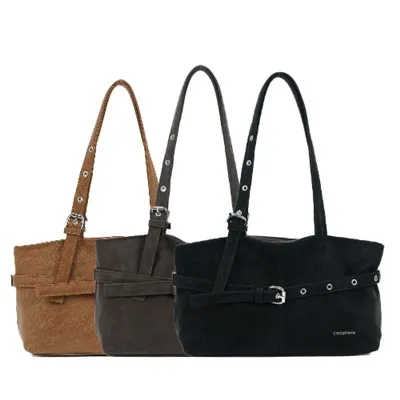
1. The Workhorse Tote (Leather or Vegan Leather)
Best for: Commuters who need to carry everything including the kitchen sink.
The tote bag is the unofficial uniform of the entry-level professional. It is the Mary Poppins bag of the office world. You need one bag that can hold your laptop, a cardigan for the aggressive office AC, a notebook, a water bottle, and your gym shoes for a lunchtime workout. The humble tote is that bag.
Why it works for new grads:
Totes have an open top (usually) or a simple snap closure, which means no fighting with zippers when you are rushing through a turnstile. They are universally accepted in every office environment, from creative agencies to law firms. Furthermore, because the market is saturated with totes, you can find extremely high-quality options at budget prices.
What to look for:
Structure: Avoid floppy, slouchy bags that collapse into a puddle on the floor. Look for a bag that stands up on its own. This protects your laptop screen and looks more polished.
Strap drop: Ensure the straps are long enough to fit over your shoulder over a winter coat or blazer. Nothing ruins a morning commute like a bag that gets stuck in your armpit.
Material: Full-grain leather is lovely but heavy. For a young professional, a high-quality vegan leather or a coated canvas (like the kind used in sailing bags) is lighter and easier to wipe clean after a rainy walk from the parking garage.
Styling tip: Since totes are large, they can swallow your smaller items. Buy a cheap "pouch system" (a small zippered bag for makeup and another for tech cords). Throwing these inside the toke keeps you from digging for fifteen minutes looking for your security badge. Stick to neutral colors: Black, Tan, Olive, or Navy. Save the hot pink for the weekend.
Price point target: 50−50−150. Check out brands like Everlane, Madewell (the Transport Tote goes on sale often), or even Uniqlo for excellent starter options.


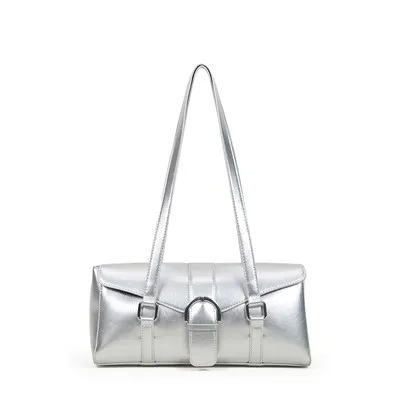
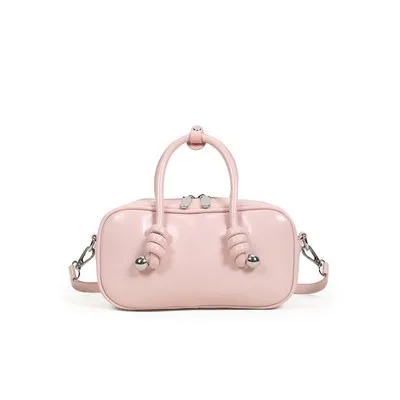
2. The Structured Top-Handle Satchel
Best for: Client meetings, interviews, and days you want to be taken seriously.
There is a psychological shift that happens when you carry a structured bag. A soft hobo says, "I'm relaxed." A backpack says, "I'm a student." But a top-handle satchel with clean lines says, "I am organized, and I mean business."
This is the bag you carry when you have to present at the morning stand-up meeting or when you are invited to shadow a senior manager at an off-site lunch.
Why it works for new grads:
While the tote is for commuting, the satchel is for arriving. It usually includes a detachable shoulder strap, giving you two options: carry it by the hand (looks very professional) or sling it crossbody (very practical for walking to the train). It forces you to edit your belongings. You cannot fit your entire life in a structured satchel, which means you will stop carrying three-day-old receipts and empty protein bar wrappers.
What to look for:
Hardware: Look for gold or silver hardware that matches the tone of your jewelry. Avoid anything that looks overly flashy or plastic.
Closure: A flap closure or a zipper is essential here. Unlike the open tote, the satchel often goes to lunch with you, and you don't want your wallet falling out when you hang it on the back of a chair.
Feet: Look for bags with metal feet on the bottom. This is a sign of quality and keeps the leather from getting scratched when you set it down on the conference room table or the floor of a taxi.
Styling tip: Keep the color professional but not boring. While black is fine, a deep burgundy, forest green, or chestnut brown shows personality without being distracting. If you buy a satchel with two handles, make sure the distance between the handles is wide enough to fit over your wrist comfortably.
Price point target: 80−80−200. Look at Fossil (their satchels last forever), The Curated, or COACH Outlet (they have amazing sales for first-time buyers).


3. The Belt Bag (Waist Pack / Fanny Pack 2.0)
Best for: Errand runs, work-from-home days, and after-work networking events.
Before you roll your eyes and think of a tourist in a neon windbreaker, hear me out. The "belt bag" has been fully rehabilitated by fashion. In a professional context, the belt bag is not a primary bag; it is a liberation tool.
If you work in a casual office or a hybrid environment where you commute via subway or bicycle, wearing a backpack might ruin your blouse, and a tote might bounce against your hip. The belt bag solves the "hands-free" equation better than any other accessory.
Why it works for new grads:
As the most junior person on the team, you are often running errands: grabbing coffee, picking up打印outs, going to the mailroom. You need your hands free to hold doors and carry things for your boss. A sleek belt bag worn across the chest (as a sling) or around the waist holds your phone, ID, lip balm, and keys securely.
What to look for:
Flat profile: You don't want a "pregnancy bump" of a bag. Look for slim, rectangular designs.
Hardware finish: Matte zippers and black buckles look much more professional than shiny silver plastic ones.
Material: Nylon is fine for the gym, but for work-adjacent use, look for smooth leather or recycled technical fabric that looks sleek (like Rains or A.P.C. style).
Styling tip: Wear it diagonally across your chest when commuting, but slip it around your waist and tuck it behind your hip when you walk into the office. It disappears under a blazer. For young women entering the workplace, this bag signals that you are efficient and mobile-you don't need a rolling suitcase to do your job.
Price point target: 30−30−70. Uniqlo makes an excellent one, as does Lululemon (the Everywhere Belt Bag is ubiquitous for a reason).
4. The Leather Backpack (Minimalist and Chic)
Best for: Bicycle commuters, public transit warriors, and anyone with back pain.
Let's address the elephant in the room. Society tells us that backpacks are for children. However, spinal health is for adults. Carrying a heavy laptop on one shoulder for ten years will ruin your posture and cause nerve damage in your neck. If your commute involves walking more than fifteen minutes, a backpack is not a luxury-it is a medical necessity.
The key is choosing a leather or structured backpack rather than the nylon Jansport you used in college.
Why it works for new grads:
You are young, but your spine is not invincible. A leather backpack distributes weight evenly across your shoulders. Furthermore, modern offices are casual. Unless you work in investment banking or a very traditional law firm, a sleek black leather backpack looks cool, intentional, and minimalist-it doesn't scream "student."
What to look for:
Top handle: A professional backpack must have a grab handle on the top. This allows you to carry it like a briefcase when you are actually inside the office.
Rolled straps: Thin, flat fabric straps look cheap. Look for softly rolled leather straps that won't dig into your shoulders.
Size: Do not buy a hiking backpack. Keep it compact-just large enough for a 13-inch laptop, a small water bottle, and a light jacket.
Styling tip: When you arrive at the office, place the backpack on the floor next to your desk (not on your chair) and use the top handle to carry it to meetings. This visually separates you from the interns who wear their backpacks on both shoulders while walking down the hallway. Keep the backpack in a dark color; light leather backpacks look dirty very quickly.
Price point target: 100−100−180. Look at Matt & Nat (vegan leather), Sandqvist, or even Target's A New Day line for surprisingly sturdy options.
5. The Evening/Networking Clutch (or Mini Bag)
Best for: Holiday parties, after-work drinks, and "Power Lunches."
Your 9-to-5 bag is for utility. But your career is not limited to office hours. Some of the most important networking happens at 7 PM over wine and small plates. You cannot walk into a cocktail bar wearing your giant commuter tote. It won't fit under the table, it looks bulky in photos, and you will have nowhere to put it.
Every young professional woman needs a small, polished bag for social work functions.
Why it works for new grads:
It signals that you understand social context. It also forces you to carry only the essentials: phone, cardholder/ID, a single lipstick, and a house key. Show up to the networking mixer with only these items, and you look confident and unencumbered. Show up with a giant tote, and you look like you are ready to go grocery shopping.
What to look for:
Wristlet or chain strap: A clutch is fine, but if you are nervous (and we all are at networking events), you want your hands free to hold a drink and shake hands. A small bag with a chain strap or a leather wristlet strap is ideal.
Closure: Get a zipper or a magnet that snaps. You will be moving around a lot; you don't want your phone falling out.
Structure: Even a small bag should hold its shape. Soft pouches look sloppy.
Styling tip: Buy this bag in a "metallic neutral." Gold, silver, or rose gold might sound flashy, but they actually act as neutrals against a little black dress or business casual trousers. Alternatively, a rich emerald or wine color works beautifully. Keep your work ID out of this bag. You don't want to flash your corporate badge while tipsy at a bar (bad look).
Price point target: 20−20−60. You do not need a designer clutch for this. Target, Zara, and ASOS are your best friends here. Because you will only use it twice a month, you don't need it to be indestructible.


How to Build Your "Bag Wardrobe" on a Budget
You do not need to buy all five of these bags tomorrow morning. That would cost $500+, which is unrealistic. Here is a smart strategy for the first six months of your new job:
Month 1: Buy the Workhorse Tote. This is your daily driver. Spend your real money here (100−100−150).
Month 2: Buy the Belt Bag (40).UseitforyourcoffeerunsandcasualFridays.∗∗Month3:∗∗Saveupforthe∗∗LeatherBackpack∗∗(40).UseitforyourcoffeerunsandcasualFridays.∗∗Month3:∗∗Saveupforthe∗∗LeatherBackpack∗∗(120). Swap it with the tote on days your back hurts or it rains.
The Gift: Ask for the Structured Satchel for your birthday or holiday gift.
The Splurge: Buy the Networking Clutch the week before the office holiday party.
Final Advice: The "Bag Check" Rule
Before you leave the house every morning, ask yourself three questions about your bag:
Is it clean? (Check the bottom for dust or gum.)
Is it organized? (Can you find a pen in under 5 seconds?)
Does it fit my day? (Tote for heavy load, Backpack for long walk, Mini bag for lunch meeting.)
Your bag is the first thing your new colleagues see when you walk into the elevator. It doesn't need to be designer. It just needs to say, "I am a capable, organized adult who is ready to solve problems today."
You have the degree. You have the drive. Now, go get the bag that matches the future you are building.